





Plastic Injection Molding Services

Scale Your Production Efficiently — When Volumes Justify the Tooling Investment

Plastic injection molding is the most cost-effective manufacturing method for high-volume production. Once your tooling is ready, per-part costs drop dramatically, making it ideal for launching products at scale. AluCarbon Tech provides end-to-end injection molding services from mold design through production — with expertise across automotive, medical, electronics and consumer goods industries.

  • Tight tolerances: ±0.05 mm precision
  • Fast turnaround: Molds in weeks, production begins in days
  • Cost-effective at volume: $0.50–$5 per part depending on complexity
  • 40+ injection molding machines: 50–2,000 ton capacity
  • Complete services: Design, mold making, production, post-processing
Upload your design and get a detailed cost breakdown within 24 hours. All uploads are secure and confidential.

When Should You Use Injection Molding?

Injection molding is not the right choice for every project. Here's the decision framework:

Choose Injection Molding When:

  • You need 1,000+ identical parts (volumes where per-part cost matters)
  • You're launching a production product (not prototyping)
  • Cost per unit is a key priority (beat 3D printing and CNC at scale)
  • Your design is relatively stable (design changes are expensive once tooled)
  • You need consistent quality across batches (tight tolerances, repeatability)

Cost Comparison: When Does Injection Molding Win?

Volume

3D Printing Cost

CNC Machining

Injection Molding

10 units

$200–$500

$500–$2,000

N/A (tool cost: $2k–$50k)

100 units

$1,500–$5,000

$5,000–$20,000

N/A (tool cost dominates)

500 units

$5,000–$25,000

$10,000–$50,000

$500–$2,500 + $250–$2,500 tool

1,000 units

$10,000–$50,000

$20,000–$100,000

$1,000–$5,000 ✓ WINS

5,000 units

$50,000–$250,000

$100,000–$500,000

$5,000–$25,000 ✓ WINS

10,000+ units

$100,000+

$200,000+

$10,000–$50,000 ✓ WINS

The Crossover Point: At 1,000 units, injection molding typically becomes cheaper than both 3D printing and CNC. At 5,000+ units, it's dramatically cheaper per part.

The Injection Molding Process: From Design to Production

01 Design Review & DFM (Design for Manufacturability)

You send your CAD design.

Our team evaluates:

  • Part geometry for moldability (draft angles, wall thickness, undercuts)
  • Material selection for application
  • Mold complexity and cost drivers
  • Potential manufacturing challenges
Timeline: 1–2 days | Cost: Free (included in quote)

02 Mold Design & Quotation

We design your custom mold and provide:

  • Detailed mold structure and tooling approach
  • Material options (steel vs aluminum, single-cavity vs multi-cavity)
  • Exact tool cost and lead time
  • Per-part production cost at various volumes

What Impacts Mold Cost:

  • Part size and complexity
  • Number of cavities (more cavities = higher tool cost but lower per-part cost)
  • Material (steel tools last longer than aluminum)
  • Surface finish requirements

Typical Mold Costs:

  • Simple, small part: $2,000–$5,000
  • Medium complexity: $5,000–$15,000
  • Complex, large part: $15,000–$50,000+
Timeline: 2–3 weeks

03 Mold Fabrication

Your mold is manufactured using precision EDM, CNC and polishing.

Key processes:

  • Cavity and core machining
  • Cooling channel integration (for faster cycle times)
  • Quality inspection and testing
Timeline: 3–6 weeks depending on complexity

04 T1 Sampling & Design Verification

We produce 5–10 sample parts from your mold to verify:

  • Dimensional accuracy
  • Surface finish quality
  • Part fit and function
  • Any design adjustments needed
Timeline: 1 week

05 Design Modifications (If Needed)

If T1 samples don't meet requirements, we:

  • Analyze the issue (material, mold adjustment, parameter change)
  • Make mold corrections if necessary
  • Produce revised samples

*Note: Minor adjustments are often free; major mold rework has additional cost.

Timeline: 1–2 weeks

06 Production Manufacturing

Once approved, we begin full production:

  • Set up production parameters using scientific molding (locked-in, repeatable process)
  • Run parts at high speed (50–500+ parts per hour depending on complexity)
  • In-process quality checks (dimensional sampling, visual inspection)
  • Consistent batch quality
Timeline: 1–2 weeks for typical volumes

07 Post-Processing & Secondary Operations

Optional finishing:

  • Trim and deburr
  • Painting, silk screening, labeling
  • Hardware insertion or assembly
  • Custom packaging
Timeline: 1–3 days

08 Quality Inspection & Delivery

Final QC before shipment:

  • Dimensional verification (CMM if needed)
  • Surface inspection
  • Functional testing
  • Secure packaging and shipment
Timeline: 1–2 days

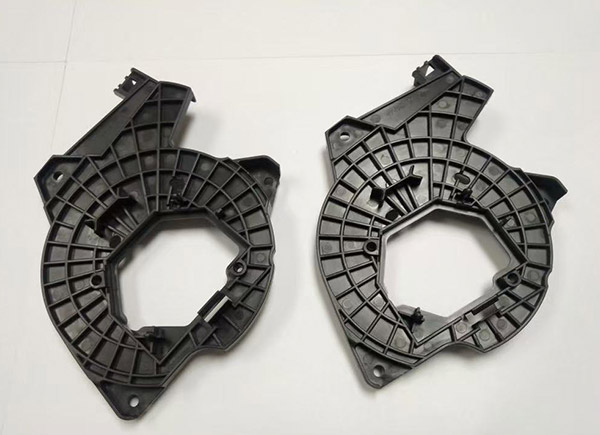
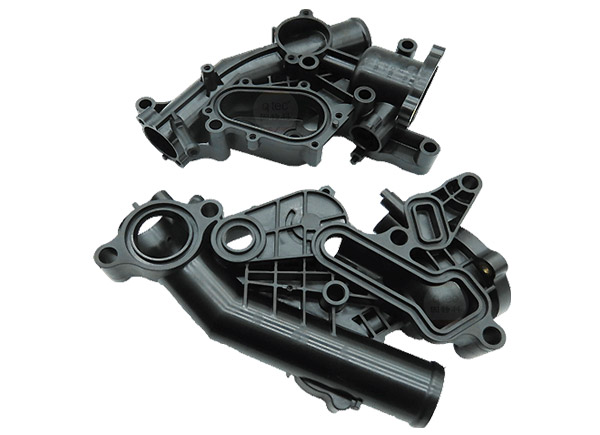
Injection Molding Parts Gallery

Materials for Injection Molding

Over 50 plastic materials available. Here's how to choose:

1. Commodity Plastics (Cost-Effective)

ABS (Acrylonitrile Butadiene Styrene)

Properties: Impact-resistant, rigid, good machinability
Best for: Consumer housings, automotive trim
Cost: Low
Heat resistance: Up to 80°C

PP (Polypropylene)

Properties: Lightweight, chemical-resistant, flexible
Best for: Containers, automotive interior, medical devices
Cost: Very low
Heat resistance: Up to 110°C

PET (Polyethylene Terephthalate)

Properties: Clear, strong, heat-resistant
Best for: Beverage bottles, transparent housings
Cost: Low
Heat resistance: Up to 100°C

2. Engineering Plastics (Higher Performance)

Nylon (PA6, PA66)

Properties: Strong, durable, wear-resistant
Best for: Mechanical parts, gears, bearings
Cost: Moderate
Heat resistance: Up to 150°C

POM (Acetal)

Properties: Low friction, dimensional stability, strength
Best for: Precision mechanical parts, moving assemblies
Cost: Moderate
Heat resistance: Up to 120°C

PC (Polycarbonate)

Properties: Transparent, impact-resistant, high strength
Best for: Protective covers, optical components
Cost: Moderate-High
Heat resistance: Up to 130°C

PEEK

Properties: Extreme strength, thermal and chemical resistance
Best for: Aerospace, medical devices, high-temperature applications
Cost: High
Heat resistance: Up to 250°C

3. Specialty Materials

TPE (Thermoplastic Elastomer)

Properties: Rubber-like flexibility, overmoldable
Best for: Soft-grip handles, seals
Cost: Moderate

Glass-Filled Plastics (GF30, GF50)

Properties: Increased stiffness, improved heat resistance
Best for: Structural parts, under-the-hood automotive
Cost: Moderate

Quality & Precision

Tolerance Capability

Standard tolerance: ±0.1 mm

Tight tolerance (with special tooling): ±0.05 mm

Factors affecting tolerance:

  • Part complexity and size
  • Material shrinkage (different materials shrink differently)
  • Mold design and wear
  • Process parameters (temperature, pressure, cooling time)

Quality Control Process

  • Material Verification — Incoming plastic resin tested for purity and properties
  • Mold Inspection — Pre-production mold inspection and testing
  • T1 Sampling — First articles carefully documented and inspected
  • In-Process Inspection — CMM or calipers check samples every hour during production
  • Final Quality Check — Every part inspected per your specifications before shipment

Quality Standards

Defect rate: <0.03% (industry-leading)

Certifications: ISO 9001, ISO 13485 (medical), ISO 14001 (environmental)

Compliance: FDA compliance for food-contact materials available

Post-Processing & Secondary Operations

Most molded parts benefit from finishing to meet aesthetic or functional requirements.

Operation Cost Lead Time Best For
Trim & Deburr +5–10% +1–2 days Remove gates and excess material
Sandblasting +10–15% +1–2 days Matte finish, remove surface marks
Painting +15–25% +2–4 days Custom colors, branding
Silk Screening +5–10% +1–3 days Logos, labels, graphics
Anodizing (aluminum parts) +20% +3–5 days Corrosion resistance, colored finish
Hardware Insertion +10–20% +1–2 days Nuts, bolts, threaded inserts
Assembly +15–30% +2–4 days Snap together, screw together
Custom Packaging +10–20% +1–3 days Branded boxes, protective padding

Why Choose AluCarbon Tech for Injection Molding

1. Transparent Pricing & Fast Quotes

  • Instant online quotes based on your CAD file
  • Detailed cost breakdown: tool cost + per-part cost at various volumes
  • No hidden charges
  • 24-hour response guarantee

2. Experienced Engineering Team

  • 10+ injection molding engineers
  • Thousands of projects across 40+ countries
  • Design optimization expertise to reduce tool cost
  • Material recommendations tailored to your application

3. Flexible Mold Options

  • Single to multi-cavity molds (2, 4, 8, 16+ cavities)
  • Family molds for multi-part assemblies
  • Insert molding and overmolding capabilities
  • Rapid prototype molds for fast iteration

4. Cost Optimization

  • DFM (Design for Manufacturability) review included
  • Suggestions to reduce tool cost and per-part cost
  • Material selection guidance
  • Production parameter optimization

5. Comprehensive Capabilities

  • 40+ injection molding machines (50–2,000 ton)
  • In-house tooling and secondary operations
  • Quality assurance and CMM inspection
  • One-stop service from design through delivery

6. Fast Lead Times

  • Molds in 3–6 weeks
  • Production samples in 1–2 weeks
  • Full production begins immediately after approval
  • Expedited options available

Frequently Asked Questions

Prototype molds: Aluminum or soft steel, designed for fast turnaround (2–3 weeks). Tool life ~5,000–10,000 parts. Cost: $2,000–$8,000. Best for: Design validation, market testing.

Production molds: Hardened steel, designed for 1,000,000+ part lifespan. Tool life: 5 years or more. Cost: $10,000–$100,000+. Best for: Long-term manufacturing runs.
Minor changes (small dimensions, texture): Often possible with minor mold adjustments, no cost.

Major changes (new features, geometry): Requires mold rework, significant additional cost.
Critical. Good design can reduce mold cost by 30–50% and per-part cost by 20–40%. Our free DFM review identifies opportunities.
Consider:
- Temperature exposure (will it see heat?)
- Chemical/corrosion exposure
- Mechanical stress (does it need to flex or support load?)
- Cost sensitivity
- Regulatory requirements (medical, food contact, etc.)

Our team recommends material based on your application.
Yes, through overmolding (2K molding). For example: rigid outer shell + soft-grip inner layer.
Pantone colors, custom colors, translucent, opaque, textured, glossy. Cost: Minimal (color additive in resin). Lead time: No impact.
- Part size (larger = more steel needed)
- Complexity (undercuts, thin walls, tight tolerances = harder tooling)
- Number of cavities (more cavities = higher tool cost, lower per-part cost)
- Surface finish (polished, textured, matte all impact tool cost)
- Material (steel vs aluminum, hardness)
Mold cost is amortized across all parts. At 1,000 units, per-part cost includes tool amortization. At 10,000 units, the tool cost is spread thin, so per-part cost drops significantly.

Example:
Tool cost: $20,000
Per-part production cost: $1.00
- 1,000 units: ($20,000 ÷ 1,000) + $1.00 = $21.00 per part
- 10,000 units: ($20,000 ÷ 10,000) + $1.00 = $3.00 per part
Yes. Use a prototype aluminum mold for validation ($3,000–$5,000, 3 weeks). Once design is locked, invest in a production steel mold ($20,000–$50,000, 5 weeks). No conflict.
There's no hard minimum, but injection molding becomes cost-effective at 1,000+ units. Below that, 3D printing or CNC may be cheaper.
Standard: ±0.1 mm
Tight (with special tooling): ±0.05 mm

Factors affecting tolerance: part complexity, material (different materials shrink differently), mold design, process parameters.
Scientific molding: We lock in optimal processing parameters (temperature, pressure, cooling time) and maintain them throughout production. In-process CMM checks verify dimensional consistency.
Yes. We can arrange:
- Tensile testing
- Impact testing
- Environmental testing (temperature, humidity, chemical exposure)
- Longevity testing

Additional cost and 2–3 weeks lead time.
- Design review: 1–2 days
- Mold design & quote: 2–3 weeks
- Mold fabrication: 3–6 weeks
- T1 sampling: 1–2 weeks
- Design approval & modifications: 1–2 weeks (if needed)
- Production: 1–2 weeks

Total: 8–15 weeks from design to delivery.
Limited. Mold fabrication time is hard to compress. Prototype aluminum molds can be made faster (3 weeks) if you prioritize speed over cost.
Yes. For large orders, we can ship directly to your customers with your labels/branding.

Injection Molding vs Other Methods — Side by Side

Need Best Method Why
1–10 parts 3D Printing Fastest, no tooling cost
100–500 parts CNC Machining Good for metal, one-off or small batches
1,000+ parts Injection Molding Lowest per-unit cost
Tight tolerances CNC (metal) Better precision than molding
Complex geometry 3D Printing Easiest for intricate shapes
Fast iteration 3D Printing Design changes = new print, no retooling
High-volume production Injection Molding Best cost, consistency, and speed
Metal parts CNC or Metal 3D Printing Molding is plastic-only

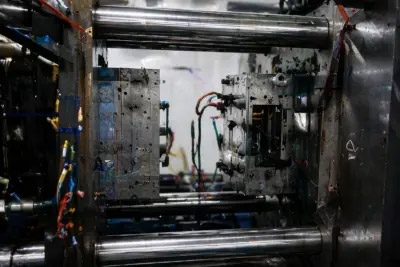
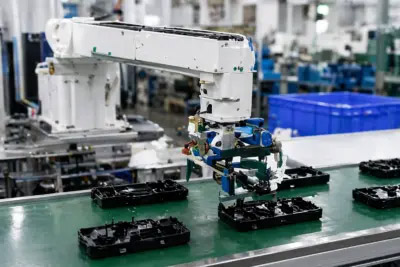
Inside Our Manufacturing Facility

Get In Touch

Send Your Message