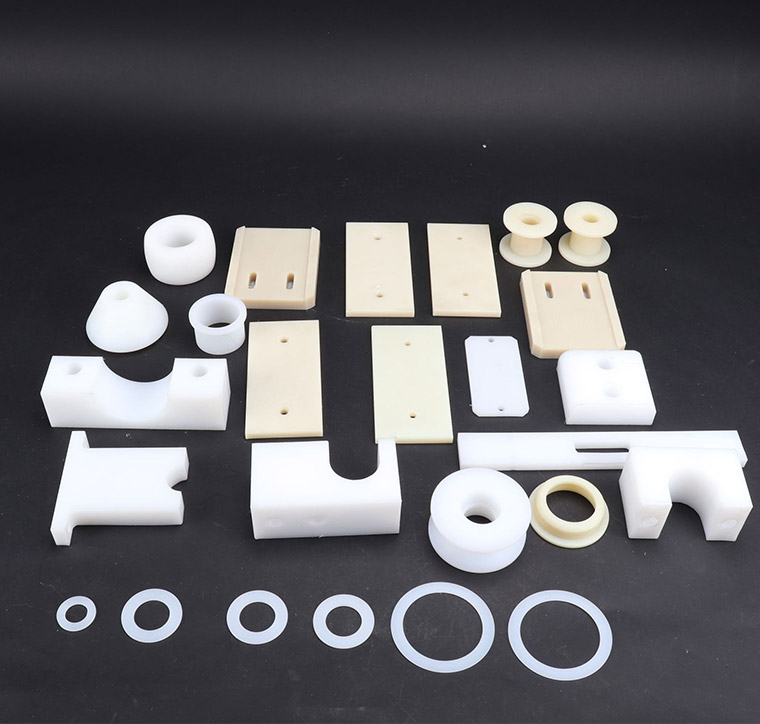
Polystyrene (PS) CNC Machining Services | AluCarbon Tech

Precision Custom PS Parts: High Optical Clarity, Dimensional Stability & Cost-Effective Engineered Polystyrene

Polystyrene (PS) is an amorphous, highly transparent engineering thermoplastic recognized globally for its exceptional dimensional stability, excellent dielectric breakdown strength, and cost-effective machinability. Exhibiting outstanding moisture resistance and minimal mold shrinkage, machined PS components are highly favored in optical diagnostics, consumer electronic enclosures, and clinical laboratory instrumentation. At AluCarbon Tech, we offer precision multi-axis CNC milling and high-speed lathe turning for both General Purpose Polystyrene (GPPS) and High Impact Polystyrene (HIPS). By implementing specialized ultra-sharp diamond-coated (PCD) and polished carbide cutting tools paired with optimized feed-rate formulas, we effectively prevent localized thermal cracking and stress-induced crazing, delivering pristine, optical-grade surface finishes and tight production tolerances.

Polystyrene(PS)

Polystyrene(PS)

Why Choose AluCarbon Tech for Polystyrene (PS) CNC Machining

  • Elite Optical Transmittance: Provides excellent light transmission thresholds for specialized GPPS optical lenses and clear visual housings.
  • Flawless Moisture & Dielectric Shielding: Near-zero water absorption guarantees long-term electrical insulation stability in sensitive electronics.
  • Advanced Stress-Free Cutting: Utilizing razor-sharp polished cutters and precision toolpaths to eliminate internal residual stress and surface crazing.
  • Multi-Axis Micro Machining: High-speed 3, 4, and 5-axis machining optimized for intricate microfluidic channels and highly cosmetic enclosures.
  • Strict High-Precision Tolerances: Maintaining strict production tolerances held up to ±0.05 mm, fully verified via automated CMM setups.
  • ISO 9001:2015 Plastic Workcenters: Controlled, dust-managed manufacturing cells ensuring absolute batch material purity and secure international delivery.

Product Description

Polystyrene Material Selection & Grade Guide

Polystyrene (PS) Grade Key Material Characteristics Target Application Environments
GPPS (General Purpose Polystyrene) Rigid, brittle, highly amorphous polymer with outstanding optical transparency, excellent gloss, and superior electrical properties. Clear laboratory petri dishes, optical fluid cells, scientific test equipment covers, diagnostic visual models.
HIPS (High Impact Polystyrene) Blended with butadiene rubber to drastically elevate impact toughness, impact strength, and structural machinability while losing clarity. Electronic enclosure housings, prototype chassis frames, internal structural brackets, custom retail displays.

Common Applications for Machined Polystyrene Components

Industry Key Components
Clinical Diagnostics & Microfluidics Transparent optical test cells, high-purity fluidic handling trays, visual fluid manifolds, and laboratory specimen plates.
Electrical & Insulation Hardware Dielectric spacing insulators, non-conductive mounting blocks, high-frequency capacitor housings, and terminal base boards.
Consumer Electronics & Prototypes Highly aesthetic display bezels, custom prototype product cases, impact-resistant HIPS equipment covers.
Sim Racing & Specialized Equipment Lightweight custom dashboard button plates, decorative translucent display covers, and custom instrument prototype rings.

Frequently Asked Questions (FAQ)

Q: Why is Polystyrene prone to cracking during CNC machining, and how does AluCarbon Tech resolve this?
A: GPPS is highly brittle and possesses low thermal conductivity. High cutting friction easily generates heat, which causes localized thermal stress, micro-cracking, and a phenomena called 'crazing' (fine surface cracks). AluCarbon Tech completely resolves this by utilizing ultra-sharp, high-rake carbide or polished diamond tools running at optimized feed-rates, paired with a constant high-pressure cold dry air blast. This avoids heat generation and evacuates chips immediately, producing a flawless crystal-clear edge finish.
Q: What is the main difference between GPPS and HIPS from a machining perspective?
A: GPPS is crystal clear but extremely brittle, meaning it requires meticulous toolpath feed controls to avoid shattering during deep milling or drilling. HIPS is modified with rubber, which makes it opaque but significantly tougher and highly ductile. HIPS machines exceptionally smoothly like a standard engineering plastic, making it ideal for robust structural chassis prototypes and structural enclosures.
Q: Can CNC machined Polystyrene components achieve an optical-grade finish?
A: Yes. For GPPS components requiring light transmission or clear fluid tracking, we utilize high-precision single-point diamond turning (SPDT) and specialized post-machining vapor polishing or diamond compound buffing techniques to restore absolute transparency and eliminate microscopic tool marks.
Q: Do you enforce minimum order quantities (MOQ) for custom engineered Polystyrene parts?
A: AluCarbon Tech supports design and engineering teams globally with zero MOQ limitations. We smoothly process everything from a single high-clarity optical prototype for testing up to high-volume commercial production runs exceeding 1,000+ custom batches.
Get In Touch

Send Your Message