Copper is one of the most valuable materials in precision manufacturing. Its exceptional electrical conductivity, thermal conductivity, and corrosion resistance make it the material of choice for critical applications from telecommunications infrastructure to aerospace components. However, copper demands specialized expertise to machine. AluCarbon Tech brings over a decade of experience machining copper components with precision tolerances, clean finishes, and rapid turnaround times for clients worldwide.
Copper comes in several commercial grades, each with distinct properties and machinability characteristics. Selecting the right grade is critical for balancing performance, cost, and manufacturability.
| Grade | Composition & Key Properties | Best Applications | Machinability |
|---|---|---|---|
| C101 (Pure Copper) | 99.99% pure copper. Excellent electrical and thermal conductivity. Very soft and ductile. | Electrical connectors, busbars, heat sinks, wire components | Challenging very gummy, requires sharp tools and excellent chip control |
| C110 (Electrolytic Copper) | 99.90% pure with oxygen content. Good electrical properties. Better machinability than C101. | Electrical contacts, electromagnetic shields, thermal management | Moderate requires tool management but more forgiving than C101 |
| Brass (Cu + Zn) | Copper-zinc alloy (typical 60% Cu, 40% Zn). Excellent machinability, good corrosion resistance. | Fasteners, valves, mechanical components, decorative parts | Excellent machines cleanly with standard tools |
| Bronze (Cu + Sn) | Copper-tin alloy. Higher strength, lower conductivity than pure copper. Good wear resistance. | Bearings, bushings, wear components, marine applications | Good strong but machines well with proper technique |
Copper is soft and ductile, which makes it machinable but also creates unique challenges. Success requires specialized knowledge and precise parameter control.
Copper forms long, stringy chips that curl and stick to tools, clogging flutes and creating surface defects.
Copper's softness causes material to adhere to the cutting tool, creating a built-up edge that ruins surface finish and dimensional accuracy.
Copper generates significant heat during machining. High thermal conductivity pulls heat from the cutting zone but creates thermal cycling stress on tools.
Without optimal tool geometry, feeds, and speeds, copper smears instead of cutting clean, resulting in poor surface finish.
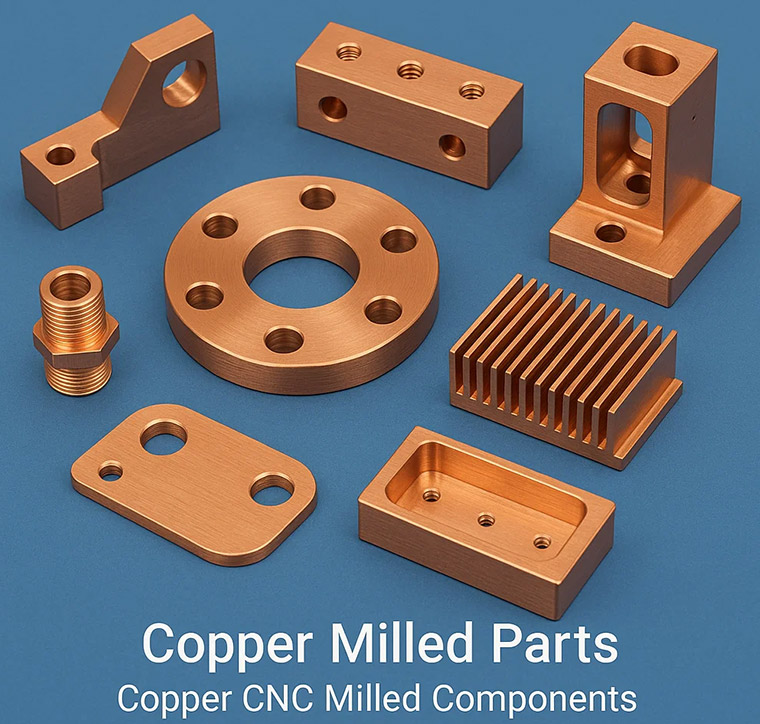
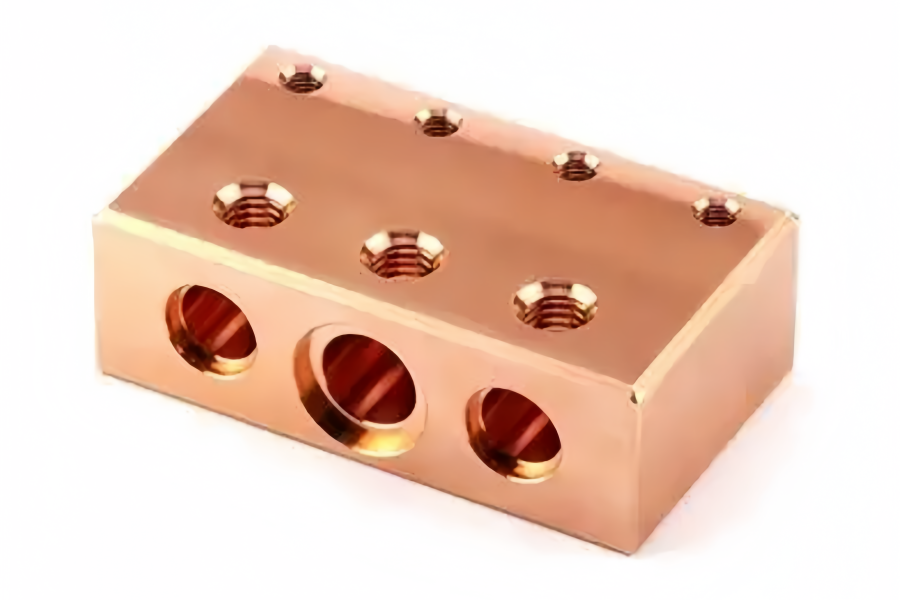
We use advanced 3-axis, 4-axis, and 5-axis CNC mills to create complex copper components with intricate geometries. Multi-axis capabilities allow us to minimize setups, reduce machining time, and achieve superior surface finishes. Ideal for heat sinks, connectors, and precision mechanical components.
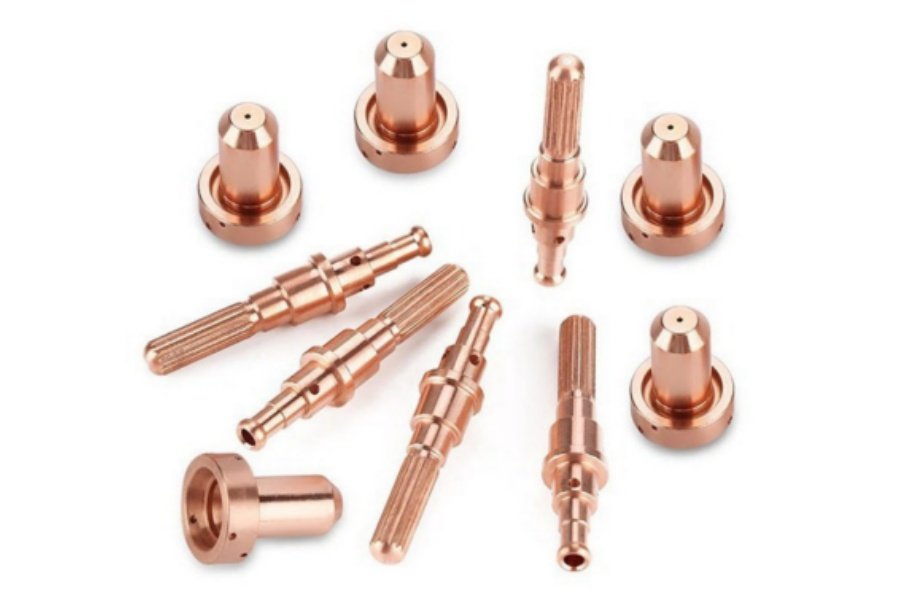
Precision turning is cost-effective for cylindrical, threaded, and symmetrical copper parts. Our turning centers support high-speed spindles and advanced tooling for consistent quality across large production runs. Perfect for busbars, wire components, and valve bodies.
For highly complex copper geometries or tight tolerances impossible with conventional milling, we offer EDM (Electrical Discharge Machining) and water jet cutting. These techniques can achieve tolerances to ±0.01 mm and create features that standard tooling cannot reach.
| Industry | Key Components | Why Copper |
|---|---|---|
| Electronics & Telecommunications | RF connectors, antennas, waveguide components, EMI shielding, heat sinks for 5G infrastructure | Copper's electrical conductivity and thermal properties are essential for signal integrity and heat management |
| Aerospace & Defense | Electrical contacts, thermal management systems, connector pins, thermal spreaders | Copper components meet strict aerospace tolerances and reliability standards while managing thermal loads |
| Medical Devices | Electrode components, antimicrobial device parts, surgical instrument components | Copper's antimicrobial properties and biocompatibility make it valuable for medical applications |
| Automotive & EV | High-current busbars, power distribution connectors, thermal management plates | Electric vehicles require high-conductivity copper components for power distribution and thermal management |
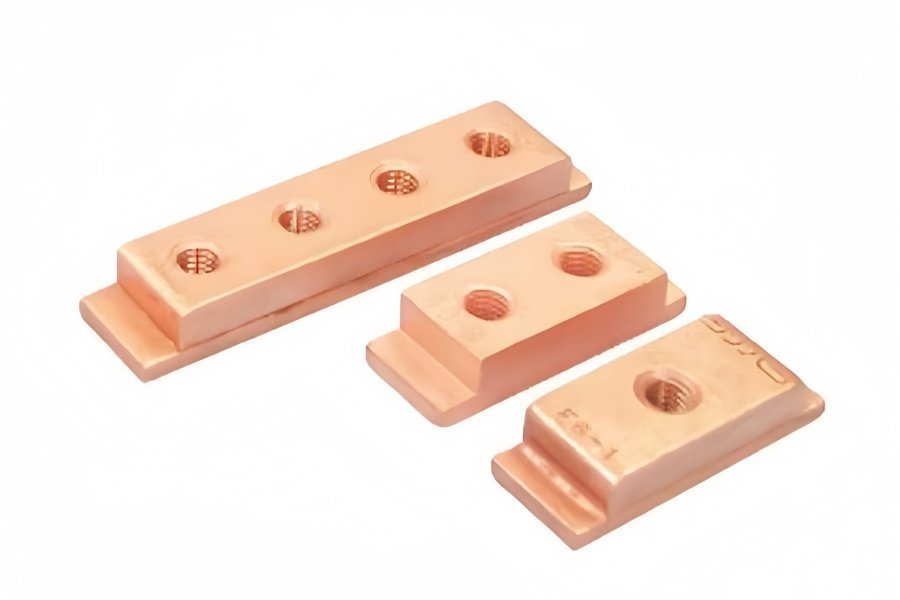
| Industrial & Power Generation | Busbars, switchgear components, power terminals, heat exchangers | Copper's combination of strength, conductivity, and corrosion resistance is unmatched for power applications |
Copper's softness and malleability require strict process control to maintain dimensional accuracy. AluCarbon Tech employs rigorous quality protocols throughout production:
Copper CNC machining cost depends on multiple factors: Part complexity and geometry (intricate features require more setup and tool time), Copper grade selected (pure copper more expensive; alloys more cost-effective), Surface finish requirements (tighter finishes demand additional machining and post-processing), Production volume (larger batches reduce per-unit costs through setup amortization), Post-processing operations (plating, polishing add significant cost for visible surfaces), and Tolerances required (tighter tolerances require slower feed rates and additional inspection).
2-4 weeks for custom copper components depending on complexity and part count. Expedited options available. International orders include documentation support for seamless customs clearance.