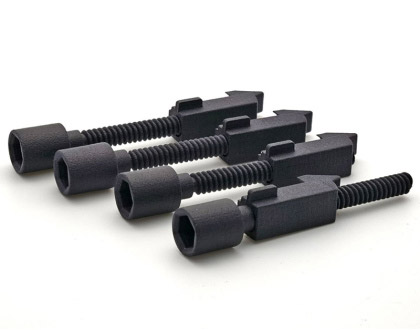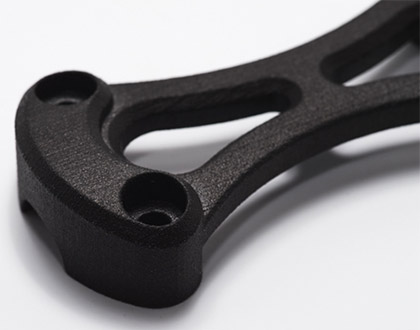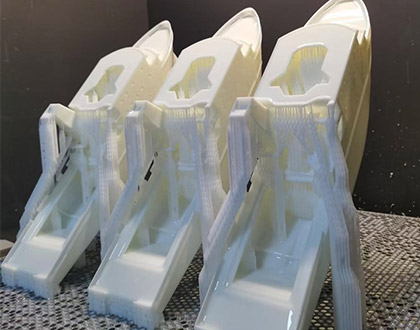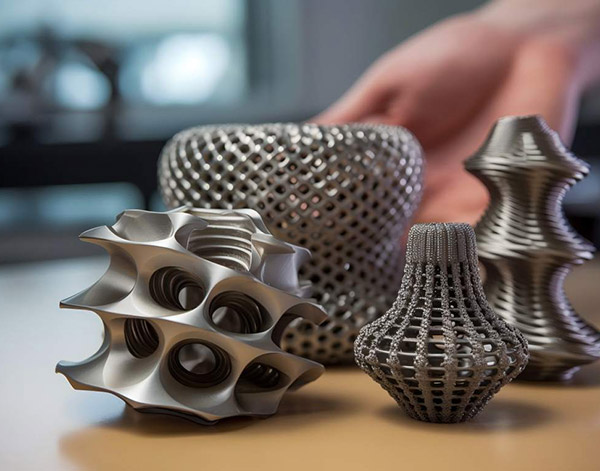




3D Printing & Rapid Prototyping Services

Turn Your Design Into a Physical Part in Days — Not Weeks

When you need to test an idea, validate a design, or produce a small batch before committing to expensive tooling, 3D printing offers the speed and flexibility that traditional manufacturing can't match. AluCarbon Tech provides professional additive manufacturing services across FDM, SLA, SLS, and metal 3D printing technologies.

From concept validation to bridge production, we help product teams, engineers and manufacturers bring designs to life with precision, speed and cost-effectiveness.

  • Fast turnaround: 2-5 days for prototypes, 5-10 days for small batches
  • No tooling costs — Zero investment needed to test a design
  • No minimum order quantities — Order 1 part or 1,000
  • 30+ materials from rigid engineering plastics to metals
  • Precision tolerances up to ±0.1 mm with post-processing
Upload your 3D files today and receive a quote within 24 hours.
All uploads are secure and confidential.

Why 3D Printing? Why Now?

Product development moves fast. You need to validate form, fit and function quickly — before investing in tooling, before manufacturing, before launch.

Traditional manufacturing methods (injection molding, CNC machining) require expensive setup costs, minimum orders and weeks of lead time. For most product teams, that's too slow and too expensive for early-stage prototyping. 3D printing changes that equation.

The Problem with Traditional Prototyping:

  • Injection molding: $2,000–$5,000 for a prototype mold, 3–4 weeks for samples
  • CNC machining: Best for metal, but expensive per-part and slow for iteration
  • Hand assembly: Inconsistent quality, not scalable

Why 3D Printing Works:

  • ✓ Design changes don't require new tooling — just update your CAD file and print again
  • ✓ You can test multiple design variations in the time it takes to get ONE prototype from injection molding
  • ✓ Cost per part is predictable and doesn't spike until you reach high volumes
  • ✓ Minimum order is 1 — perfect for sampling, market testing or bridge production

3D Printing Technologies We Offer

Not all 3D printing is the same. Different technologies suit different applications. Here's how to choose:

1. FDM (Fused Deposition Modeling) — For Functional Prototypes

How it works: Plastic filament is melted and extruded layer by layer to build your part.

Ideale per:
  • Functional prototypes that need to withstand stress and wear
  • Parts requiring engineering-grade materials (nylon, ASA, carbon fiber-reinforced)
  • Designs with complex internal channels or cavities
  • Parts that will be tested under load or repeated use
Advantages:
  • Lowest cost per part
  • Widest range of durable engineering materials
  • Fast print times for larger parts
  • Good for iterative design testing
Limitations:
  • Surface finish shows layer lines (can be sanded smooth with post-processing)
  • Internal support structures may be visible
  • Not ideal for very detailed, smooth surfaces
Tempi di consegna: 2–4 days
Typical accuracy: ±0.3 mm (±0.1 mm with post-processing)
2. SLA (Stereolithography) — For Detailed, Smooth Parts

How it works: An ultraviolet laser solidifies liquid resin layer by layer to create precise, smooth parts.

Ideale per:
  • High-detail prototypes requiring smooth surfaces
  • Parts with complex geometries, fine details and intricate features
  • Visual prototypes that need to look "production-ready"
  • Jewelry, dental, orthodontic and medical models
  • Mold masters and master patterns
Advantages:
  • Excellent surface finish — minimal post-processing needed
  • High resolution and fine detail capability
  • No internal support structures visible
  • Fast for small, detailed parts
Limitations:
  • Resin parts are less durable than FDM plastics
  • Limited material options (specialized resins only)
  • Can be brittle under impact
  • Larger parts cost significantly more
Tempi di consegna: 2–3 days
Typical accuracy: ±0.1 mm (excellent detail)
3. SLS (Selective Laser Sintering) — For Strong, Functional Parts Without Supports

How it works: A laser fuses nylon powder together layer by layer, producing strong, functional parts with no need for support structures.

Ideale per:
  • Functional parts that need to be strong and durable
  • Complex assemblies where internal geometry matters
  • Parts with undercuts, overhangs or complex shapes
  • Products moving toward low-volume production (1,000–10,000 units)
  • Snap fits, hinges, moving parts and mechanical assemblies
Advantages:
  • No supports needed — use build volume more efficiently
  • Strong, durable parts ready for functional testing
  • Can consolidate assemblies into single parts
  • Excellent material properties (nylon)
  • Perfect bridge between prototyping and production
Limitations:
  • Higher cost per part than FDM
  • Slightly rougher surface finish (can be smoothed)
  • Requires powder handling (longer lead times)
  • Part size limited by machine
Tempi di consegna: 3–5 giorni
Typical accuracy: ±0.3 mm (very consistent)
4. Metal 3D Printing (DMLS/SLM) — For High-Performance Metal Parts

How it works: A high-power laser fuses metal powder (aluminum, titanium, stainless steel) to create fully functional metal parts.

Ideale per:
  • High-performance aerospace and defense components
  • Heat-critical or high-stress applications
  • Complex internal cooling channels
  • Medical implants and devices
  • Parts where weight reduction is critical
Advantages:
  • Full material properties — equivalent to machined or cast parts
  • Complex internal geometry impossible with CNC
  • Lightweight designs (topology optimization)
  • Excellent for low-volume production
Limitations:
  • Highest cost per part
  • Requires post-processing (support removal, heat treatment)
  • Longer lead times
  • Size limited by machine
Tempi di consegna: 5–7 giorni
Typical accuracy: ±0.2 mm

3D Printing vs Other Manufacturing Methods — When to Use Each

Understanding when to use 3D printing versus injection molding, CNC machining or other methods is critical for cost and timeline management. The following table:

Factor 3D Printing (Our Service) Stampaggio a iniezione Lavorazione CNC Hand Assembly
Speed to first part 2-5 days 3-4 weeks (mold required) 1-2 weeks Variable, inconsistent
Tooling cost $0 $2,000–$10,000+ Low (setup charges) $0
Cost per part (qty 10) $20–$100 $50–$500 $30–$200 High, variable
Cost per part (qty 1,000) $10–$50 $5–$30 (lower than 3D printing) $20–$100
Design flexibility Excellent (change anytime) Limited (mold locked) Bene Poor
Surface finish Good (post-processing available) Excellent (built-in) Eccellente Variable
Tolerance capability ±0.1–0.3 mm (with post-processing) ±0.05–0.1 mm ±0.01 mm Poor
Ideal volumes 1–5,000 units 1,000+ units (high volume) 1–500 units 1–50 units
Ideale per Prototyping, low-volume, bridge production Produzione su larga scala Metal, tight tolerances Custom one-offs

3D Printing Materials — Choose the Right One for Your Application

Different materials have different properties. Here's how to choose:

1.Plastic & Engineering Materials

ABS (acrilonitrile-butadiene-stirene)

Caratteristiche: Impact-resistant, tough, good machinability
Ideale per: Functional prototypes, mechanical parts, enclosures
Limitations: Not suitable for high-heat applications
Typical use: Automotive trim, consumer electronics housings

Nylon (PA12 / PA11)

Caratteristiche: Strong, flexible, excellent wear resistance, chemical-resistant
Ideale per: Functional parts, snap fits, hinges, moving assemblies
Limitations: Absorbs moisture over time
Typical use: Mechanical assemblies, clip-together parts, flexible components

TPU (Thermoplastic Polyurethane)

Caratteristiche: Rubber-like, flexible, durable, high impact resistance
Ideale per: Gaskets, seals, grips, flexible joints, protective covers
Limitations: Limited color options
Typical use: Phone cases, protective gaskets, flexible mounts

PETG

Caratteristiche: Durable, chemical-resistant, clear options available, food-safe potential
Ideale per: Transparent parts, chemical-resistant housings, food-contact prototypes
Limitations: Moderate temperature resistance
Typical use: Clear covers, chemical-resistant enclosures

ASA (Acrylonitrile Styrene Acrylate)

Caratteristiche: UV-stable, outdoor-durable, excellent weathering resistance
Ideale per: Outdoor products, automotive exterior parts, garden equipment
Limitations: Higher cost
Typical use: Weatherproof housings, automotive vents, outdoor fixtures

High-Performance Plastics (PEEK, PEI)

Caratteristiche: Extreme heat resistance (260°C+), strength, cost
Ideale per: Settore aerospaziale, dispositivi medici, applicazioni ad alta temperatura
Limitations: High cost, limited manufacturers
Typical use: Aerospace components, medical implants, high-temp sensors

2.Resins (SLA Printing)

Standard Resins

Caratteristiche: Rigid, smooth finish, wide range of colors
Ideale per: Visual models, master patterns, detailed prototypes
Typical use: Product renders, dental models, jewelry masters

Tough Resins

Caratteristiche: Impact-resistant, flexibility, durable
Ideale per: Functional parts, moving assemblies
Typical use: Snap fits, mechanical assemblies

Flexible Resins

Caratteristiche: Rubber-like, elastic, high elongation
Ideale per: Seals, gaskets, wearables
Typical use: Flexible phone cases, protective gaskets

3.Metals (DMLS/SLM)

Aluminum (AlSi10Mg)

Caratteristiche: Lightweight, good strength, thermal conductive
Ideale per: Aerospace, automotive, heat-critical applications
Costo: Alto
Typical use: Brackets, heat sinks, airframe components

Stainless Steel (316L)

Caratteristiche: Corrosion-resistant, strong, durable
Ideale per: Medical, food-processing, corrosive environments
Costo: Very high
Typical use: Medical implants, food equipment, marine components

Titanium (Ti6Al4V)

Caratteristiche: Extremely strong, lightweight, biocompatible
Ideale per: Aerospace, medical implants, high-performance applications
Costo: Highest
Typical use: Aerospace brackets, joint implants, racing parts

3D Printing Post-Processing & Surface Finishes

Raw 3D printed parts can be enhanced through post-processing to improve appearance, durability and function. The following table:

Finish Option Materiali Processo Appearance Tempi di consegna Ideale per
As-Printed All None Visible layer lines, functional texture +0 days Prototypes, internal parts
Sanding & Smoothing FDM, Nylon, Resin Manual or automated sanding Smooth, matte finish, layer lines minimized +1-2 days Functional prototypes, mechanical testing
Lucidatura Resin, Metal Progressive polishing High-gloss, refined professional appearance +2-3 days Visual prototypes, product samples
Vapor Smoothing Nylon Chemical vapor treatment Fused, glossy seamless surface +1-2 days Aesthetic parts, end-use products
Painting & Coating All materials Spray, brush or immersion Custom colors, protective finish +2-4 days Branded prototypes, finished products
Dye & Coloring Nylon, Plastic Chemical immersion Uniform color throughout +1-2 days Colored functional parts
Nichelatura chimica Metal prints Electrochemical Metallic silver finish, wear-resistant +3-5 days Metal parts requiring corrosion resistance
Anodizzazione Aluminum prints Electrochemical process Hard, durable, color options available +4-6 days Aerospace, industrial, aesthetic metal parts
Hard Coating (Type III) Alluminio Advanced anodizing Extremely durable, wear-resistant +5-7 days High-wear applications, extreme duty

3D Printing Parts Gallery

Real Applications — Where 3D Printing Solves Problems

1. Consumer Electronics & Hardware

The Challenge: You're launching a new consumer product. The industrial design looks great in CAD, but you need to test ergonomics, button placement, and assembly before committing to injection molding.

The 3D Printing Solution:
  • Print housings and covers in ABS or nylon to test fit and feel
  • Make rapid design changes based on user feedback
  • Validate assembly sequences before tooling
  • Print multiple color variations to test market appeal
Costo: $300–$2,000 for prototype iterations
Timeline: 5–7 days total
2. Medical Device Development

The Challenge: Your medical device is complex. You need functional prototypes to validate:

  • Fit with human anatomy
  • Sensor and electronic integration
  • Sterilization resistance
  • User ergonomics and safety
The 3D Printing Solution:
  • Print custom models in biocompatible resins or sterilizable nylon
  • Iterate on anatomical fit and user feedback
  • Create surgical planning models for physicians
  • Test with actual end-users before production
Costo: $500–$3,000 for validation prototypes
Timeline: 2–3 weeks for complete iteration cycle
3. Automotive & Racing Components

The Challenge: You're developing a custom bracket for a race car. Traditional CNC or casting would be expensive and slow.

The 3D Printing Solution:
  • Design and print weight-optimized brackets in high-strength nylon or aluminum
  • Test fit and function on the vehicle
  • Refine cooling or mounting geometry based on real-world testing
  • Print 10 units for a regional race series
  • Move to higher-volume manufacturing only after proving the design
Costo: $200–$1,000 for functional testing parts
Timeline: 1–2 weeks from design to track testing
4. Manufacturing & Industrial Tools

The Challenge: You need specialized fixtures, jigs or tooling for your production line.

The 3D Printing Solution:
  • Design custom fixtures tailored to your exact assembly process
  • Print prototypes to validate fit and assembly sequence
  • Modify based on production feedback
  • Print backup fixtures without waiting for traditional tooling
  • Print spare parts on-demand (no inventory needed)
Costo: $500–$5,000 for custom tools
Timeline: 1–2 weeks to operational tools

Our 3D Printing Process

01 Design Review & Feasibility Assessment

You upload your 3D CAD file (STL, STEP, IGES, etc.).

Our team reviews:

  • Part geometry and complexity
  • Recommended printing technology (FDM vs SLA vs SLS vs metal)
  • Material options for your application
  • Potential manufacturing challenges (overhangs, supports, etc.)
  • Post-processing requirements
Timeline: 2–4 hours

02 Material & Technology Recommendation

Based on your requirements, we recommend:

  • Optimal printing technology for your design
  • Best material choice (strength vs cost vs detail)
  • Post-processing options to meet your finish requirements
  • Lead time and pricing for your chosen configuration
Timeline: Same day, included in quote

03 Instant Quote & Order Confirmation

You receive:

  • Detailed quote breakdown (material, printing, post-processing, delivery)
  • Lead time and delivery estimate
  • Manufacturing specifications and tolerances
  • Confirmation of all requirements
Timeline: Within 24 hours

04 Design Preparation & Pre-Print Validation

Our team prepares your file for printing:

  • Slicing optimization for your specific printer
  • Support structure design (minimized for FDM, eliminated for SLS)
  • Build orientation optimization
  • Pre-print simulation to catch potential issues
Timeline: 1–2 hours before printing begins

05 Printing & In-Process Quality Monitoring

Your part(s) are printed using the specified technology:

  • Printer parameters confirmed and locked
  • Printing progress monitored (no unattended failures)
  • Material quality verified throughout
  • Post-processing preparation begins
Timeline: 1–4 days depending on technology and part size

06 Post-Processing & Finishing

Parts are finished per your specifications:

  • Support removal and cleanup
  • Sanding, polishing, or surface treatment (if requested)
  • Painting, plating, or custom finishing
  • Final inspection and quality control
Timeline: 1–3 days (depends on finishing complexity)

07 Quality Inspection & Delivery

Final quality assurance:

  • Dimensional verification on critical features
  • Surface finish inspection
  • Functional testing (if applicable)
  • Imballaggio e spedizione sicuri
Timeline: 1 day

Frequently Asked Questions About 3D Printing

They're the same thing. "3D printing" is the common term. "Additive manufacturing" is the formal industry term. Both refer to building parts layer by layer from digital designs, as opposed to subtractive manufacturing (CNC machining) which removes material.
Accuracy depends on technology and post-processing:
- FDM: ±0.3 mm standard (±0.1 mm with sanding)
- SLA: ±0.1 mm (excellent detail)
- SLS: ±0.3 mm (very consistent)
- Metal: ±0.2 mm
For comparison, injection molding achieves ±0.05 mm, CNC achieves ±0.01 mm. For most prototyping and low-volume applications, 3D printing accuracy is more than adequate.
Both. 3D printing was originally for prototyping, but modern industrial-grade 3D printing produces durable, functional end-use parts. Many products are now sold with 3D-printed components. It depends on your volume and performance requirements.
It depends on what you're testing:
- Visual prototype (looks good): SLA resin — smooth, detailed appearance
- Functional prototype (needs to work): FDM nylon or ASA — durable, strong
- Moving parts/assemblies: SLS nylon — no supports, excellent mechanical properties
- High-temperature application: PEEK or titanium — expensive but necessary
- Outdoor/weatherproof: ASA — UV-stable and durable
Our team can recommend the best option during design review.
Often yes. Nylon, ASA, and PETG can be used in both 3D printing and injection molding. However, properties may differ slightly (3D-printed nylon is isotropic; injection-molded is directional). For functional testing, 3D-printed material is usually adequate.
Pricing depends on:
- Part size and complexity
- Technology used (FDM is cheapest, metal is expensive)
- Material (engineering plastics are moderate, metals are high)
- Quantity (cost per part decreases with volume, but no minimum)
- Post-processing (sanding, painting, plating adds cost)

Typical examples:
- Small ABS prototype: $50–$200
- Nylon functional part: $100–$500
- SLA resin model: $80–$300
- Metal part: $500–$5,000+

Use our instant quote tool for exact pricing.
No. You can order 1 part or 1,000. Pricing is transparent for any quantity.
Yes. This is actually a strength of 3D printing. Many customers print, test, modify the design, and print again. Each iteration is independent — no tooling costs, no setup penalties.
Standard: 2–5 days for prototypes, 5–10 days for small batches
Express: Rush options available (1–2 days, may have small surcharge)
Lead time depends on printer queue and post-processing complexity
We accept: STL, STEP, IGES, OBJ, X-T, SLDPRT, SAT, DWG (3D views)
If your file is in a different format, we can usually convert it. Just ask.
Generally at 5,000–10,000 units. The crossover point depends on:
- Part complexity (simpler parts switch over earlier)
- Material cost differences (expensive materials stay longer in 3D)
- Your unit volume targets

At 1,000 units, 3D printing is usually cheaper and faster. At 10,000+ units, injection molding becomes cost-effective due to lower per-unit cost.
Yes. Larger orders (100+ parts) have tiered pricing. Use our quote tool for exact pricing at your quantity.
Contattaci

Invia il tuo messaggio