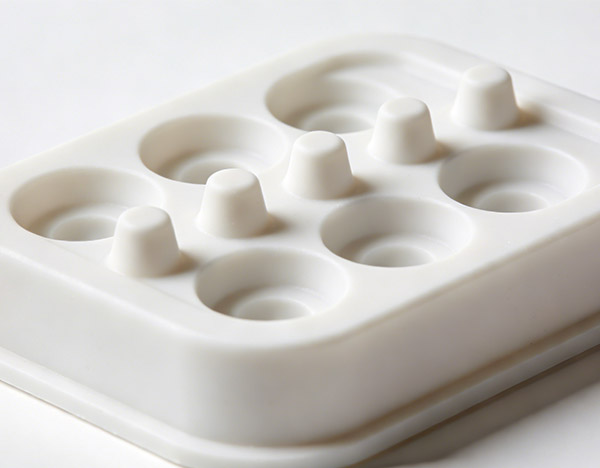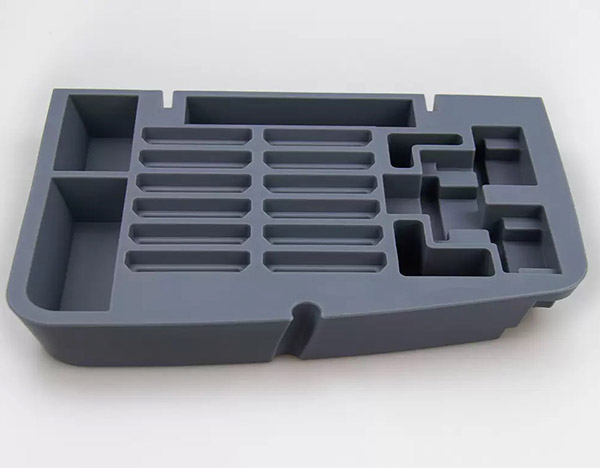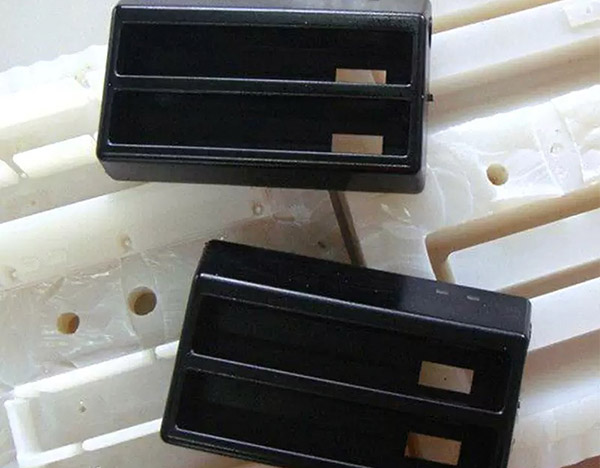







Vacuum Casting & Urethane Casting Services

Production-Quality Parts in 7-14 Days — Bridge the Gap Between Prototyping and Mass Production

Vacuum casting (also called urethane casting) produces small-batch plastic parts that look and feel like injection-molded products, but without the $10,000+ tooling cost and 8-week lead time. Perfect for small production runs, market testing, and bridging from prototype to high-volume manufacturing.

  • Low tooling cost: Mold from $200–$1,000
  • Fast turnaround: 7–14 days from design to parts
  • Production-grade quality: Smooth surface, tight tolerances, material variety
  • Small batch friendly: 10–500 parts per mold (20–50 cycles per mold)
  • Cost per unit: $10–$100 depending on complexity
Upload your design for instant cost and timeline evaluation.

When Should You Use Vacuum Casting?

Choose Vacuum Casting When:

  • You need 10–500 identical parts (larger than 3D printing comfort zone, smaller than injection molding sweet spot)
  • You want production-grade appearance (smooth surface, no layer lines)
  • You're testing market demand before committing to injection molding
  • You need fast lead time (weeks, not months)
  • Low upfront cost is critical (prototype mold = $500–$1,500)

Quick Cost Comparison

Quantity

Impression 3D

Moulage sous vide

Moulage par injection

10 unités

$200–$500

$800–$1,500

$2,000–$50,000+ (tooling only)

50 units

$800–$2,500

$1 500 – $5 000 ✓ BEST

$2,000–$50,000+

100 unités

$1 500 – $5 000

$2,000–$10,000 ✓ BEST

$2,500–$60,000+

500 unités

$5 000 – $25 000

$5,000–$50,000

$10,000–$100,000 (crossover point)

1,000+ units

$10,000+

Not ideal

$10 000 – $50 000 ✓ VICTOIRES

Key Insight: Vacuum casting dominates the 10–500 part range where 3D printing quality isn't good enough and injection molding costs too much.

The Vacuum Casting Process

Step 1 — Design Review

Upload CAD file.

We evaluate:

  • Master model feasibility (3D printed or CNC)
  • Wall thickness and undercuts
  • Material recommendation
  • Silicone mold complexity
Délai : 1 à 2 jours

Step 2 — Master Model Production

Create a perfect positive from your design using:

  • SLA 3D printing — Best for fine detail, smooth surface
  • CNC machining — Best for tight tolerances, metal-like finish
  • SLS 3D printing — Good for complex geometry
Cost: $200–$500 | Lead time: 1–3 days

Step 3 — Silicone Mold Fabrication

Silicone is poured around master model and cured under vacuum:

  • Splits mold into two halves
  • Gates and vents added
  • Master removed, leaving cavity
Cost included in quote | Lead time: 3–4 days

Step 4 — Casting & Curing

Process details:

  • Heat polyurethane resin to correct viscosity
  • Pour into mold under vacuum (removes air bubbles)
  • Allow to cure (4–8 hours depending on resin)
  • Demold part carefully
Lead time: 2–3 days per batch

Step 5 — Finishing & Delivery

Final steps:

  • Trim gates and flash
  • Light sanding if needed
  • Optional: paint, dye, assembly
  • Inspect and package
Lead time: 1–3 days | Total Lead Time: 7–14 days from design to delivery

Materials for Vacuum Casting

Vacuum casting resins simulate injection-molded plastics or elastomers:

Material Type

Properties

Idéal pour

Coût

ABS-Like

Rigid, durable, impact-resistant

Housings, brackets, enclosures

Standard

PP-Like

Lightweight, flexible, chemical-resistant

Containers, flexible parts

Standard

PC-Like

Transparent, strong, heat-resistant

Protective covers, light pipes

Standard

Acrylic-Like (PMMA)

Crystal clear, rigid

Transparent windows, optical components

Standard

Rubber-Like (TPE/TPU)

Flexible, soft-touch, elastomeric

Gaskets, grips, seals, flex joints

+15%

High-Temperature

Heat-resistant (up to 120°C)

Under-hood automotive, appliance parts

+20%

Color Options: Black, white, gray, translucent, custom colors available (+5-10% cost)

Quality & Tolerances

Standard Capabilities

  • Tolerance: ±0.25 mm (standard) / ±0.1 mm (with post-processing)
  • Surface finish: Smooth, glossy, matte, or textured
  • Detail capability: Fine features down to 0.5 mm
  • Part size: Small components to 2-meter assemblies
  • Taux de défauts : <1% (high-quality parts)

What Affects Quality

  • Master model accuracy (better master = better casting)
  • Mold design (gates, vents, cooling channels)
  • Material selection (different resins have different flow characteristics)
  • Casting temperature and pressure
  • Demold technique

Vacuum Casting vs Other Methods

Facteur Impression 3D Moulage sous vide Moulage par injection
Upfront cost Faible Low–Medium Élevé
Per-unit cost (100 parts) $15–$50 $10–$100 $5–$20 (after tooling)
Délai de livraison 2–5 days 7–14 days 8–15 weeks
Surface quality Visible layer lines Smooth, production-like Excellent
Material selection Limited Wide range Wide range
Part strength Modéré Good (near production-grade) Excellent
Idéal pour Prototypes, low detail testing 10–500 parts, market testing 500+ parts
Flexibilité de conception Excellent (easy changes) Good (mold remakes cost $300–$600) Poor (mold rework expensive)

Why Choose AluCarbon Tech for Vacuum Casting

1. 
Complete In-House Capability
  • Master model production (SLA, SLS, CNC)
  • Silicone mold fabrication
  • Vacuum casting and finishing
  • No outsourcing = faster, cheaper
2.  
Délais d'exécution rapides
  • 7–14 days from design to parts
  • Expedited options available (5-day turnaround)
  • Parallel processing for multiple batches
3.  
Material Expertise
  • 15+ standard urethane formulations
  • Material recommendations based on application
  • Custom color matching
  • High-temperature and specialty materials available
4.  
Cost Transparency
  • Free design review and recommendations
  • Cost breakdown: master model + mold + per-unit casting
  • Pas de frais cachés
  • Quote within 24 hours
5.  
Quality Assurance
  • Dimensional inspection on every batch
  • Surface finish verification
  • Material test certificates available
  • 100% defect-free guarantee
6.  
Design Support
  • Révision DFM (conception en vue de la fabricabilité) incluse
  • Suggestions to reduce cost and improve quality
  • Wall thickness optimization
  • Undercut analysis and solutions

Vacuum Casting Parts Gallery

Foire aux questions

They're the same process with different regional names:

Vacuum casting — because vacuum is used to remove air bubbles
Urethane casting / Polyurethane casting — the material used (polyurethane resin)

All three terms mean the same thing.
Aspect Moulage sous vide Moulage par injection
Mold material Silicone (soft) Metal (hard)
Pressure Low (gravity-fed) High (pressurized)
Temperature Low (~40°C) High (~200°C)
Mold cost $200–$1,500 $2,000–$100,000+
Mold lifespan 20–50 cycles 1,000,000+ cycles
Best volume 10–500 parts 500+ parts
Part quality Production-like Production-grade
Délai de livraison 7–14 days 8–15 weeks
At approximately 500 parts, injection molding becomes cheaper per unit despite higher tooling cost.

At 1,000+ parts, injection molding is clearly superior for cost and speed.
Yes, but each mold lasts only 20–50 cycles before degrading. After that, you'll need a new mold ($300–$600 to remake).

For larger volumes, it's more cost-effective to switch to injection molding.
      
Undercuts are challenging in silicone molds.

Solutions:
- Simplify design (preferred)
- Multi-part assembly (cast separately, assemble)
- Flexible silicone (for minor undercuts)

Discuss with our team — many designs can be modified at minimal cost.
Smallest: Details down to 0.5 mm (jewelry, medical parts)
Largest: Up to 2 meters long (automotive bumpers, large housings)
Sweet spot: 50 mm to 500 mm (most cost-effective)
Yes. Clear acrylic-like resin produces crystal-clear, optically transparent parts. Perfect for light pipes, protective covers, display windows.

Do you offer multi-color or multi-material parts?
- Single color: Standard
- Multi-color: Paint or dye after casting
- Multi-material: Limited (requires sequential casting or assembly)
CAD is converted to a physical master model because:
- Silicone mold requires a physical part to copy
- Master model accuracy directly affects casting quality
- It's fast and inexpensive ($200–$500) compared to the rest of the process
Yes. Recasting from the same silicone mold costs only the per-unit price ($10–$100), not the master or mold remake.

We'll investigate root cause and adjust parameters.
Partially. Standard lead time is 7–14 days.

Expedited service (5-day turnaround) is possible for simpler parts at +20–30% cost surcharge.
If within 2–3 months, the silicone mold may still be usable (check condition).

Reuse mold: only pay per-unit casting cost (~$10–$100).
If mold is degraded: remake silicone mold (~$300–$600) and cast new batch.
Standard tolerance: ±0.25 mm
Achievable with care: ±0.1 mm

Variables: part complexity, material choice, mold condition

For critical dimensions, tolerance control is available but increases cost 15–20%.
<1%. Quality control includes:
- Master model inspection before mold making
- T1 sample verification
- In-process inspection during batch casting
- Final QC before shipment
Yes. We ship worldwide from Hong Kong/Shenzhen. Standard delivery: 7–14 days by sea. Express options available.
Yes.

Optional finishing services:
- Painting/dyeing: +$5–$15 per part, +2–3 days
- Assembly: +10–20% cost, +1–2 days
- Custom packaging: +$200–$500 setup, +1–2 days
Nous contacter

Envoyez votre message