Titanium CNC Machining Services| AluCarbon Tech

Ultimate Strength, Minimal Weight, Extreme Performance for Aerospace, Medical & Advanced Engineering

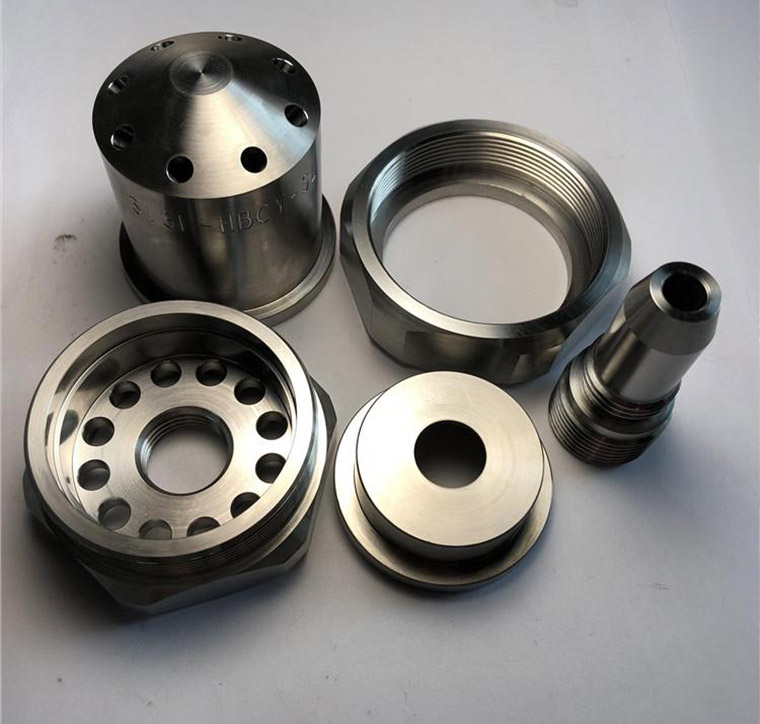
Titanium represents the pinnacle of high-performance engineering materials. Prized for its unmatched strength-to-weight ratio, supreme corrosion resistance, extreme temperature tolerance, and 100% biocompatibility, titanium is the material of choice for the world’s most demanding applications. From complex aerospace components and life-saving medical implants to high-speed robotics and racing engineering, titanium enables innovations impossible with other metals. However, titanium is notoriously challenging to machine. Its low thermal conductivity, high affinity for tool materials, and rapid work-hardening demand specialized expertise. AluCarbon Tech brings deep titanium machining knowledge, advanced equipment, and proven processes to deliver precision components that survive the toughest conditions.

التيتانيوم

التيتانيوم

Why Choose AluCarbon Tech for Titanium CNC Machining?

  • Specialized expertise with all major titanium grades (Grade 2 CP, Grade 5 Ti-6Al-4V, Grade 23, Grade 29)
  • Advanced equipment and rigid fixturing specifically optimized for titanium’s unique machining characteristics
  • High-pressure, through-tool coolant systems essential for managing titanium heat generation
  • Multi-axis CNC capability (3, 4, 5-axis) for complex aerospace and medical geometries
  • Tolerances as tight as ±0.005 mm with medical-grade surface finish capability
  • Extended lead times managed efficiently: 3-5 weeks for standard titanium components
  • Aerospace-grade quality certifications (working toward AS9100D compliance)
  • Full traceability documentation for medical device and aerospace applications

وصف المنتج

Titanium Alloy Selection Guide

Titanium alloys are engineered for specific performance requirements. Commercial Pure (CP) grades prioritize corrosion resistance and biocompatibility. Alpha-Beta alloys like Ti-6Al-4V offer superior strength. Selection depends on balancing strength-to-weight needs, environmental exposure, temperature tolerance, and cost.

Grade Type التركيب والخصائص الرئيسية أفضل التطبيقات قابلية المعالجة الآلية
Grade 2
(Commercially Pure)
99.2% titanium. Excellent corrosion resistance (outstanding in seawater). 100% biocompatible. Lower strength than alloys. Superior formability. Medical implants, dental fixtures, chemical processing vessels, marine equipment, biomedical devices معتدل
work-hardens but less aggressive than alloys. Challenging but manageable with proper technique
Grade 5
(Ti-6Al-4V)
Most common titanium alloy. 6% aluminum, 4% vanadium. Superior strength (2x pure titanium). Excellent aerospace workhorse. Good corrosion resistance. Jet engine components, aerospace structures, medical implants, high-performance automotive, industrial valves, compressor blades Very Challenging
rapid tool wear, work-hardening tendency, poor thermal conductivity. Demands expertise.
Grade 23 Low-nickel biomedical grade. 6% aluminum, 2.4% vanadium, small molybdenum & iron content. Exceptional biocompatibility, good strength. Advanced medical implants, pacemakers, surgical instruments, dental applications, implant abutments Moderate-Challenging
better machinability than Grade 5 but still demands tool expertise and cooling strategy
Grade 29
(Ti-5.8Al-4Sn-3.5Zr-0.7Nb-0.5Mo-0.35Si)
High-temperature titanium alloy. Maintains strength to 600°C. Exceptional creep resistance. Premium for extreme temperature. Gas turbine engines, aerospace turbines, rocket components, high-temperature fasteners, advanced aerospace structures Extremely Challenging
poorest machinability of titanium grades. Severe tool wear. Specialized equipment and cooling essential.
نصيحة بشأن اختيار المواد: Need maximum biocompatibility? Grade 2 or Grade 23 are superior. Want the aerospace workhorse? Ti-6Al-4V is the standard. Extreme temperatures (600°C+)? Grade 29 is necessary. Each grade presents distinct machining challenges. Our engineers help select optimal grade balancing strength, cost, and manufacturability.

Machining Titanium: Extreme Challenges & Expert Solutions

Titanium is the most challenging metal to machine. Its unique properties that make it invaluable in extreme environments create machining nightmares. Success requires specialized knowledge, premium equipment, and disciplined process control.

Extreme Tool Wear

Titanium's affinity for tool materials causes rapid adhesion and wear. Tool life is 5-10% of aluminum. Frequent tool changes increase cost and reduce throughput. Requires premium coated carbide and careful monitoring.

Poor Thermal Conductivity

Titanium conducts heat poorly. Cutting heat concentrates at the tool edge, causing rapid dulling, thermal cracking, and potential tool breakage. This is titanium's most serious machining obstacle.

Severe Work Hardening

Titanium hardens significantly during machining, increasing hardness and making subsequent cuts progressively harder. Poor feeds/speeds cause rapid hardening, requiring expert parameter control.

Galling & Adhesion

Titanium's reactive nature causes adhesion to tools and fixtures, creating galling damage and poor surface finish. Requires specialized coolant strategies and fixture design.

How We Overcome These Extreme Challenges:

Premium coated carbide tooling with TiN, TiAlN, or AlCrN coatings to resist adhesion and heat
High-pressure through-tool coolant (critical for titanium) to flush heat from cutting zone and reduce tool wear
Lower cutting speeds (conservative vs aluminum/brass) calibrated specifically for titanium grade
Optimized feed rates and depths of cut to control work hardening and heat generation
Rigid machine setup with precision fixturing to minimize deflection and chatter
Specialized tooling geometries designed specifically for titanium's reactive nature

Titanium Machining Capabilities

5-Axis CNC Milling & Complex Geometries

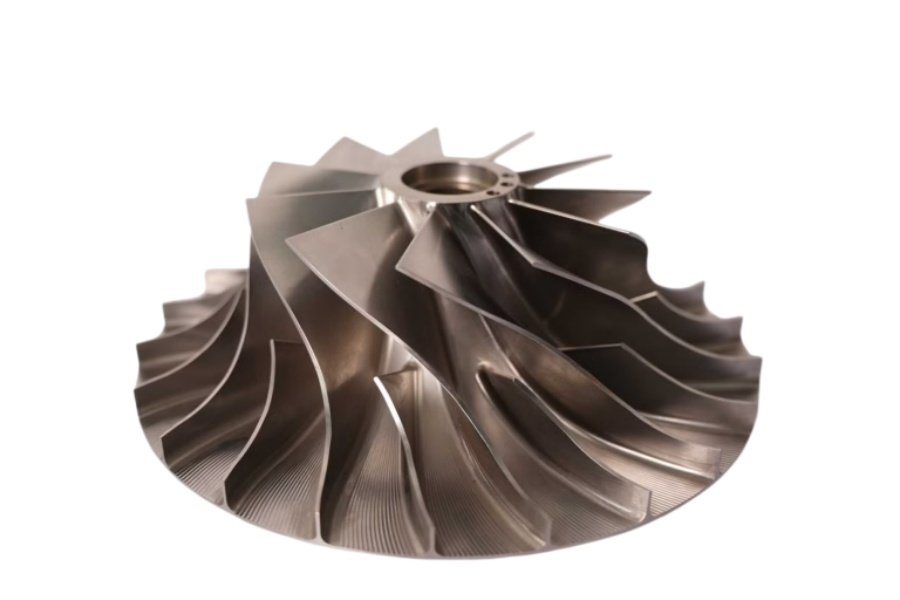
Advanced 5-axis mills with rigid spindles and high-pressure coolant systems for complex titanium components. Multi-axis capability minimizes setups and handles intricate aerospace brackets, medical housings, and turbine components. Despite machining difficulty, 5-axis allows us to complete complex parts in single setup, reducing overall lead time.

Precision CNC Turning & Cylindrical Components

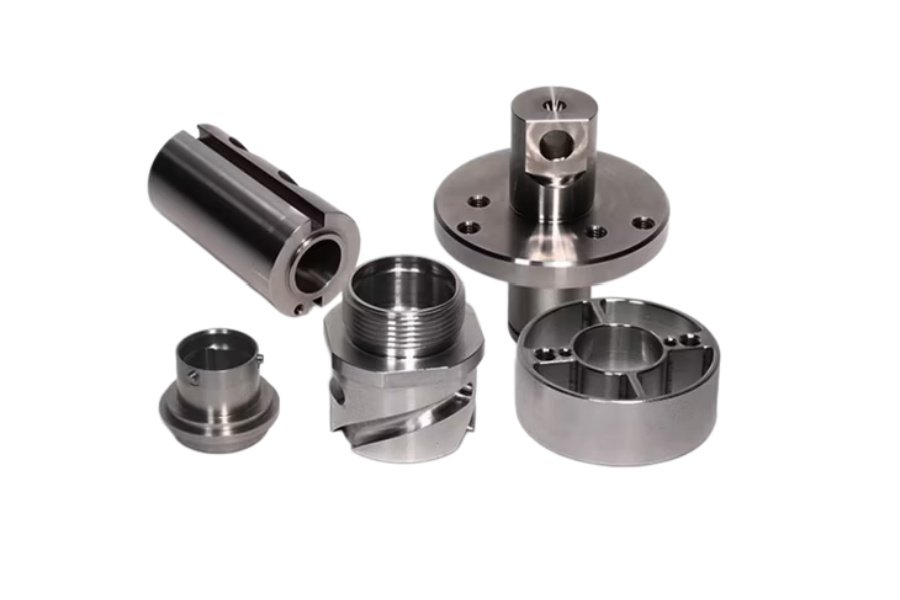
Precision turning centers optimized for titanium produce shafts, sleeves, valve bodies, and other cylindrical components. Challenging work-hardening managed through careful speed/feed control and coolant strategy. Perfect for aerospace fasteners and medical implant stems.

Wire EDM for Extreme Precision

Wire EDM (Electrical Discharge Machining) handles impossible geometries and ultra-tight tolerances (±0.005 mm) where conventional machining fails. No cutting forces means no tool wear or work hardening. Ideal for complex aerospace shapes and surgical instruments.

Industries & Applications for Titanium Components

الصناعة المكونات الرئيسية Why Titanium
الفضاء والطيران Jet engine turbine blades, compressor discs, structural brackets, landing gear components, fasteners, fuel system components Titanium's strength at extreme temperatures and light weight are irreplaceable. 60% of airframe weight savings possible. Meets aerospace reliability and safety standards.
Medical Devices & Orthopedics Bone plates, joint replacements, dental implants, surgical instruments, pacemaker housings, anatomical implants Titanium is 100% biocompatible, non-toxic, integrates seamlessly with bone/tissue. Medical-grade precision and sterility are non-negotiable.
Advanced Automotive & Racing Exhaust valves, lightweight connecting rods, suspension springs, racing engine components, high-performance fasteners Weight reduction critical for performance. Titanium's strength-to-weight enables speed and efficiency. Extreme temperature tolerance for high-revving engines.
الروبوتات والأتمتة الدقيقة Lightweight robotic arms, end-effectors, precision positioning mechanisms, high-speed rotational components Minimizing mass of moving parts increases precision, acceleration, and speed. Titanium's low density and strength enable advanced robotics.
Industrial & Chemical Processing Valve bodies, pump housings, heat exchangers, reactor vessels, chemical processing equipment Supreme corrosion resistance survives harsh chemicals, acids, and seawater. Enables equipment longevity in extreme chemical environments.

Design Guidance for Titanium CNC Machining

  • Minimize wall thickness variation to prevent thermal stress and distortion during cooling
  • Use generous radii and fillets—sharp corners are difficult to machine and stress concentration points
  • Avoid trapped cavities—ensure chip evacuation and coolant access for heat management
  • Specify surface finish carefully—polishing titanium is labor-intensive; specify only what's needed
  • Plan for tolerances realistically—ultra-tight tolerances (±0.01 mm) demand time and cost premium
  • Understand work hardening impact—avoid excessive material removal in single passes
  • Consider EDM for impossible geometries—cost justified if conventional machining infeasible

Surface Finishing & Post-Processing Options

  • Deburring: Removes sharp edges and burrs, critical for medical implants and aerospace safety components
  • Electropolishing: Smooths surface, removes embedded iron, enhances corrosion resistance. Excellent for medical devices.
  • Passivation: Chemical treatment removes surface contamination, strengthens passive oxide layer. Aerospace/medical standard.
  • Anodizing (Titanium): Creates decorative oxide layer with color options. Improves wear resistance and appearance.
  • Medical-Grade Polishing: Mirror-like finish meeting biomedical surface requirements (Ra <0.8 µm). Labor-intensive but essential.
  • Sterilization Prep: Cleaning and packaging per medical device standards (ISO 11135) for sterile implantation.

مراقبة الجودة وقدرات التفاوت المسموح به

Titanium's criticality in aerospace and medical applications demands uncompromising quality standards. AluCarbon Tech maintains rigorous protocols ensuring precision, biocompatibility, and reliability:

  • In-process inspection throughout production with documented sampling
  • CMM (Coordinate Measuring Machine) verification for critical aerospace and medical dimensions
  • Surface finish verification and cleanliness control for biomedical components
  • Material traceability and certification per aerospace (AS9100/AS9102) standards
  • Biocompatibility documentation and sterilization validation for medical devices
التفاوتات المسموح بها: Standard tolerances: ±0.1 mm. Tight tolerances: ±0.05 mm achievable with careful tooling and parameters. Ultra-tight tolerances: ±0.005 mm (±0.0002") possible through EDM or specialized finishing. Tolerance capability depends on feature complexity, part size, and required surface finish. Medical and aerospace applications benefit from our precision expertise.

اعتبارات التكلفة ومدة التنفيذ

Titanium CNC machining cost is influenced by multiple factors: Titanium grade selected (Grade 2 most cost-effective to machine; Grade 5 and Grade 29 more expensive), part complexity and geometry (intricate features increase tool changes and machining time), tolerance requirements (ultra-tight tolerances demand extended machining and inspection time), production volume (economies of scale minimal due to inherent machining difficulty), surface finish and post-processing (medical-grade polishing and sterilization add significant cost), aerospace certification requirements (traceability documentation and quality control add overhead).

المهلة الزمنية المعتادة
  • 3-5 weeks for standard titanium components (longer than other metals due to machining difficulty).
  • Complex parts or ultra-tight tolerances may require 5-8 weeks.
  • Medical sterilization adds 2-3 weeks if required.
  • Expedited options limited due to process constraints inherent to titanium machining. International orders include full aerospace/medical documentation support.

Why AluCarbon Tech for Titanium CNC Machining

  • Deep expertise in all major titanium grades with proven track record in aerospace and medical sectors
  • Specialized equipment calibrated specifically for titanium's extreme machining requirements
  • High-pressure through-tool coolant systems essential for managing titanium's heat generation
  • Team trained in titanium's unique challenges: work hardening, tool wear, galling, thermal management
  • Aerospace-grade quality systems with full traceability for AS9100D compliance path
  • Medical device expertise including biocompatibility and sterilization documentation
  • Advanced finishing capabilities including electropolishing and medical-grade polishing in-house
  • Transparent communication about titanium's complexity—we manage expectations and deliver reliable results

الأسئلة الشائعة

Q: What's the difference between Grade 2 and Grade 5 titanium?
A: Grade 2 is 99.2% pure titanium—excellent biocompatibility and corrosion resistance, lower strength, better machinability. Grade 5 (Ti-6Al-4V) is 2x stronger with aluminum and vanadium alloying, aerospace standard, but significantly harder to machine. Choose Grade 2 for medical implants and corrosion-critical applications. Choose Grade 5 for strength-critical aerospace and high-performance applications.
Q: Why is titanium so difficult to machine?
A: Titanium's poor thermal conductivity concentrates heat at the tool edge, causing rapid wear. Its reactive nature promotes adhesion to tools. It work-hardens severely. Low modulus means parts deflect easily. Combined, these factors mean titanium requires premium coated carbide, conservative speeds, high-pressure coolant, and expert technique. Tool life is 5-10% of aluminum.
Q: How tight can tolerances be?
A: Standard tolerances: ±0.1 mm. Tight tolerances: ±0.05 mm achievable with careful tooling and parameters. Ultra-tight: ±0.005 mm (±0.0002") possible via EDM or specialized finishing. Tighter tolerances demand extended lead time and cost premium. Discuss tolerance requirements early—we'll advise on feasibility.
Q: How long does titanium machining take?
A: 3-5 weeks typical for standard titanium components (longer than other metals). Complex parts may need 5-8 weeks. Expedited options limited due to inherent machining difficulty. Aerospace/medical certification documentation adds 1-2 weeks. Plan accordingly—titanium projects demand patience.
Q: Can you provide aerospace or medical certifications?
A: Yes. We maintain material traceability, dimensional documentation, and quality records per aerospace standards (working toward AS9100D). For medical devices, we provide biocompatibility documentation, sterilization validation, and cleanliness control. Specify certification requirements at project start.
Q: What surface finishes are available?
A: As-machined acceptable for many aerospace parts. Electropolishing removes embedded iron and smooths surface—excellent for medical implants. Passivation enhances corrosion resistance. Medical-grade polishing (Ra <0.8 µm) labor-intensive but essential for implants. Anodizing available for color. Discuss finish requirements early.

Ready to Machine Your Titanium Components?

Whether you need aerospace turbine components, life-changing medical implants, high-performance racing parts, or industrial equipment, AluCarbon Tech brings the specialized expertise, advanced equipment, and commitment to deliver titanium parts that exceed expectations.


الخطوات التالية:
  • Send us your CAD files and application details (STEP, IGES, or DWG format)
  • Receive a detailed quote within 24-48 hours with realistic timeline and transparent pricing
  • Discuss aerospace or medical requirements for certification and traceability
  • يبدأ الإنتاج بإدارة مخصصة للمشروع وتواصل منتظم
اتصل بنا

أرسل رسالتك